THE LAHONTAN AUDUBON SOCIETY

  • About
    • History & Mission
    • Staff & Board
    • Annual Reports
  • Birding
    • CHRISTMAS BIRD COUNT
    • Area Birding Guide
    • CONSERVATION
    • Plants for Birds
    • Birding By Bus
    • Birding News
  • GET INVOLVED
    • Join/Renew
    • Donate
    • Volunteer
    • Calendar
  • Education
  • Resources
    • FAQ
    • Bird Safety & Ethics
    • INJURED BIRD? OR BABY BIRD OUT OF NEST?
    • Urban Waterfowl
  • Store
  • CONTACT US
  • About
    • History & Mission
    • Staff & Board
    • Annual Reports
  • Birding
    • CHRISTMAS BIRD COUNT
    • Area Birding Guide
    • CONSERVATION
    • Plants for Birds
    • Birding By Bus
    • Birding News
  • GET INVOLVED
    • Join/Renew
    • Donate
    • Volunteer
    • Calendar
  • Education
  • Resources
    • FAQ
    • Bird Safety & Ethics
    • INJURED BIRD? OR BABY BIRD OUT OF NEST?
    • Urban Waterfowl
  • Store
  • CONTACT US

AREA BIRDING GUIDE

Return to List

Washoe Lake Birding Guide

3/29/2024

Comments

 
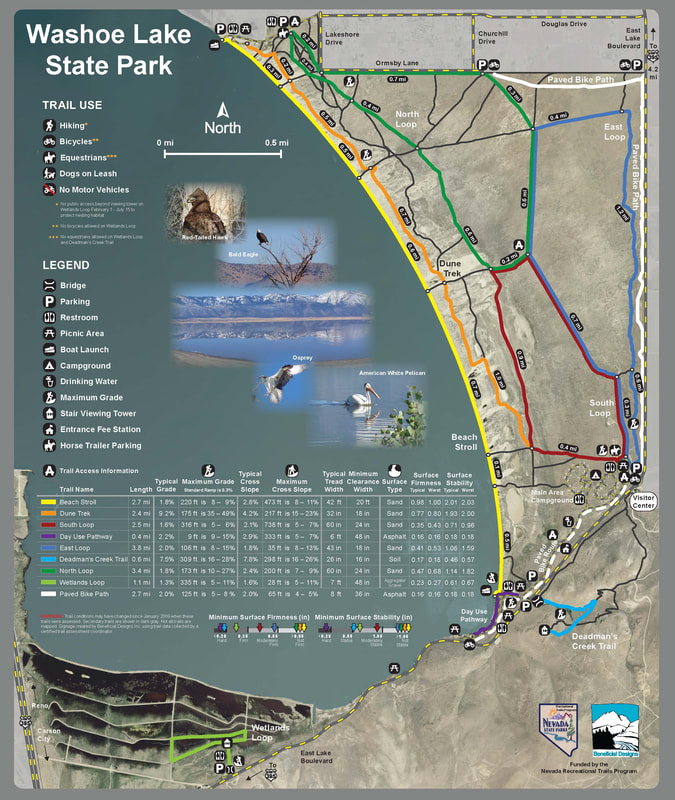
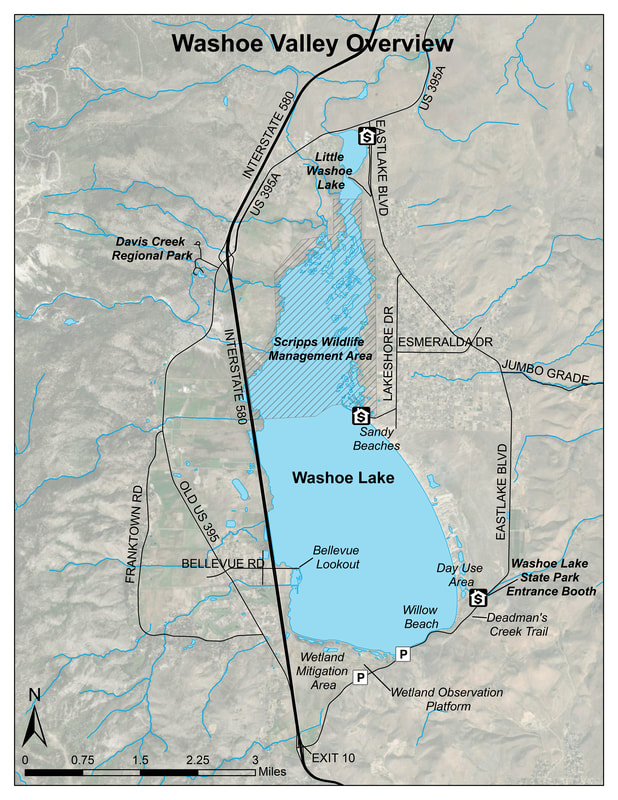
​WHAT TO EXPECT:  Washoe Valley is located between Reno and Carson City and is part of Washoe Lake State Park. The entrance fees are on the website and a day use permit is valid at all entrances. Sand dunes occur along the eastern shoreline of the lake, with marshy wetland areas on the north and south shores. I-580/US-395 parallels the western side of the lake, with limited access. A mature cottonwood grove occurs on the southeast corner in the State Park Day Use Area. The surrounding uplands are dominated by sagebrush and bitterbrush. The Virginia Range is on the east side of Washoe Valley and the Carson Range on the west.
 
Best time of year: Birding is good year-round, however a greater variety of birds are found in the spring and early summer. Raptors can be seen throughout the year.
 
Notable species: eBird Hotspot Link
Over 200 species have been seen around Washoe Lake. Owls, eagles, hawks, orioles, warblers, wrens, robins, finches, sparrows, woodpeckers, magpies and starlings can be found in the cottonwoods and willows. Herons and egrets forage along the shallow shoreline. American White Pelicans and a variety of waterfowl frequent the lake.
 
HOW TO GET THERE:  Google Map of the Area 
From Reno, take I-580/US-395 South 12 miles to Exit 25B, Washoe City/South Virginia St. Continue 7 miles on Alt US-395 South through Pleasant Valley. At the top of the hill between Pleasant and Washoe Valley, turn south (left) on to Eastlake Blvd/Co. Road 101. Continue 7 miles to the south entrance to Washoe Lake State Park. After entering the Park, turn left and continue to the Day Use parking area.
(For  a quicker route to Washoe Lake State Park, take I-580/US-395 South of Reno to Exit 10 (East Lake) which enters the park from the south.)
​
POPULAR BIRDING ROUTES at Washoe Lake State Park:
  1. Day Use Area. Walk south through the cottonwoods and willows toward Willow Beach. Look for orioles, warblers, wrens, woodpeckers, kinglets, flycatchers and vireos in the spring and summer. In the adjacent sagebrush upland areas, look for sparrows and towhees. Black-billed Magpies, Scrub Jays, Yellow-rumped Warblers and American Robins are abundant year-round. Woodpeckers are also present year-round.
  2. Group Area. After turning around at Willow Beach, continue north past the Day Use Area toward the Group Site. Check the Lake for ducks and grebes. Look for oriole nests in the trees.
  3. Ponds and Dunes. Continue walking along the lakeshore or on the dunes to reach the pond area between the campground and the day use area. Alternately, drive back to the Maze parking area to see if the ponds along the dunes to the north have water. If water is present, shorebirds can be found in the ponds. Either walk from here to the ponds or drive to the campground. Take the A Loop around to the Visitor Parking Area. Walk down the trail toward the ponds and the lake. Birds can also be seen throughout the campground.
 
Optional Side Trips: 
Little Washoe Lake is 7 miles to the north of Washoe Lake and is described in a separate guide.
 
Deadman’s Creek Trail is .2 miles past the park entrance, on the right. A single track dirt trail goes up through a spring-fed  riparian area to a gazebo with a great view of the valley. Various routes can be taken: a half- mile for a short loop through the riparian area or 1.5 miles round trip to the Gazebo up the hill. Lark Sparrows have been seen in the upland area.
 
Continuing south on Eastlake Blvd, stop at the Washoe Lake Wetland Mitigation Area  which has a restroom and a walk out to an observation  platform. A spotting scope is helpful.
 
If returning to Reno via US395, stop at the Bellevue Exit (Exit 12) to look for shorebirds and pelicans.
 
Davis Creek Park is located on the northwest side of Washoe Valley, with a description provided in a separate guide.
Picture
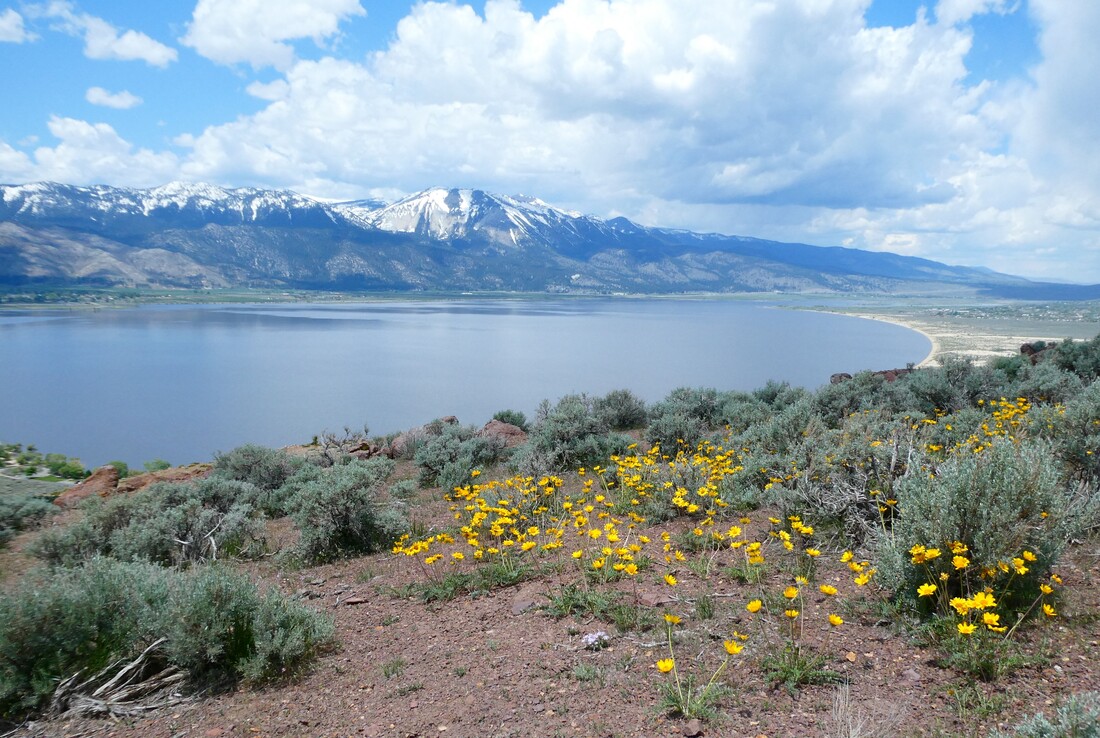
Photo by Lori Bellis
Picture
Picture
Return to Area Birding Guide List

Comments
Picture
Lahontan Audubon Society
PO Box 2304
Reno, NV 89505-2304
[email protected]
Picture
Lahontan Audubon Society Mission Statement:
To preserve and improve the remaining habitat of birds and other wildlife, restore historical habitat, and educate people, especially children, ​about birds in our unique Nevada environments.
Bird Photos by Jeff Bleam
​

Privacy Policy
​
ADA Compliance 
​
Reno Web Design